

Sentrix is an AI-driven decision layer - proprietary software paired with drone hardware we build ourselves - between inspection evidence and an auditable decision.
Built to help integrity teams validate, compare, prioritise, and report inspection findings with far less manual effort. Written for the people who have to trust it - integrity engineers, chief engineers, and program managers. Here is what the platform does, and what you get out of it.
The cost of an inspection cycle is in the decisions, not the flight
Capturing the evidence is the easy, cheap part of a cycle. The expensive part is everything that happens to that evidence afterwards - and that is where today’s workflow leaks time.
Which asset to inspect first is a judgement call
Deciding which segment of a long pipeline corridor, or which vessel and heater in a turnaround queue, to prioritise often rests on institutional memory and spreadsheets rather than a defensible, evidence-based ranking - so the same effort does not always land where it matters most.
Evidence review is slow and manual
Inspection evidence is reviewed piece by piece by experienced engineers, a process that scales with asset footprint and depends heavily on who happens to be looking on a given day.
Comparing to last time is done from memory
The most valuable question - what changed since the last inspection - is answered by an engineer trying to recall a prior cycle, rather than from evidence that lines up cleanly on its own.
Reports are re-created by hand
Turning field findings into a finished, reportable record is a manual, error-prone step that consumes engineering time better spent on judgement.
One decision layer, alongside what you already run
The drone is one input. Sentrix takes the evidence it captures, makes it comparable and defensible, and hands a decision-ready result to the systems your team already uses. It does not replace anything.
- Drone evidenceRaw inspection data from the field
- SentrixStandardise · compare · prioritise
- Integrity engineerReviews evidence, stays in control
- Existing systemsThe tools your team already runs on
- DecisionWhere to inspect, repair, and report
Comparable evidence
The valuable question is rarely what is there today - it is what changed since the last inspection. Sentrix makes that comparison reliable, so an evolving problem is visible early rather than rediscovered from scratch each cycle.
By keeping evidence consistent from one cycle to the next, the platform surfaces genuine change - and stops re-flagging the same static features every time - so an engineer spends time on what moved, not on re-reviewing what did not.
Confidence you can defend
A score no one can interrogate is a liability, not an aid. Sentrix attaches the supporting evidence to every finding and shows how confident it is, so the engineer stays in control of the judgement.
That auditability is what lets a finding survive scrutiny - from a chief engineer, a regulator, or an incident review - because the reasoning is visible rather than asserted.
Fits what you already use
Operators already run integrity-management and risk-based-inspection processes. Sentrix is built to slot into them - standardising and prioritising the evidence that flows through - not to become another system that has to be adopted wholesale.
Findings come out in a form that is ready to feed the operator’s existing records and reports, so the output reduces manual work instead of creating a new silo of it.
Sentrix is the layer between raw drone evidence and risk-based inspection - not a replacement for either end of it.
A risk-based inspection (RBI) programme built on frameworks like API 580 and API 581 needs current, comparable evidence to keep its damage-factor calculations honest - and today, a lot of that evidence arrives as raw drone imagery someone still has to manually interpret before it can feed the programme at all. Sentrix standardises that evidence, compares it against the last cycle, and hands your integrity team a prioritised, defensible input - aligned to the same threat categories ASME B31.8S already organises your gas-pipeline integrity management programme around, and structured the way NACE-style ECDA (External Corrosion Direct Assessment) indirect inspection data is normally consumed. We do not calculate your damage factors or run your RBI model for you - that stays with your engineers and your existing IDMS. We close the gap immediately before it.
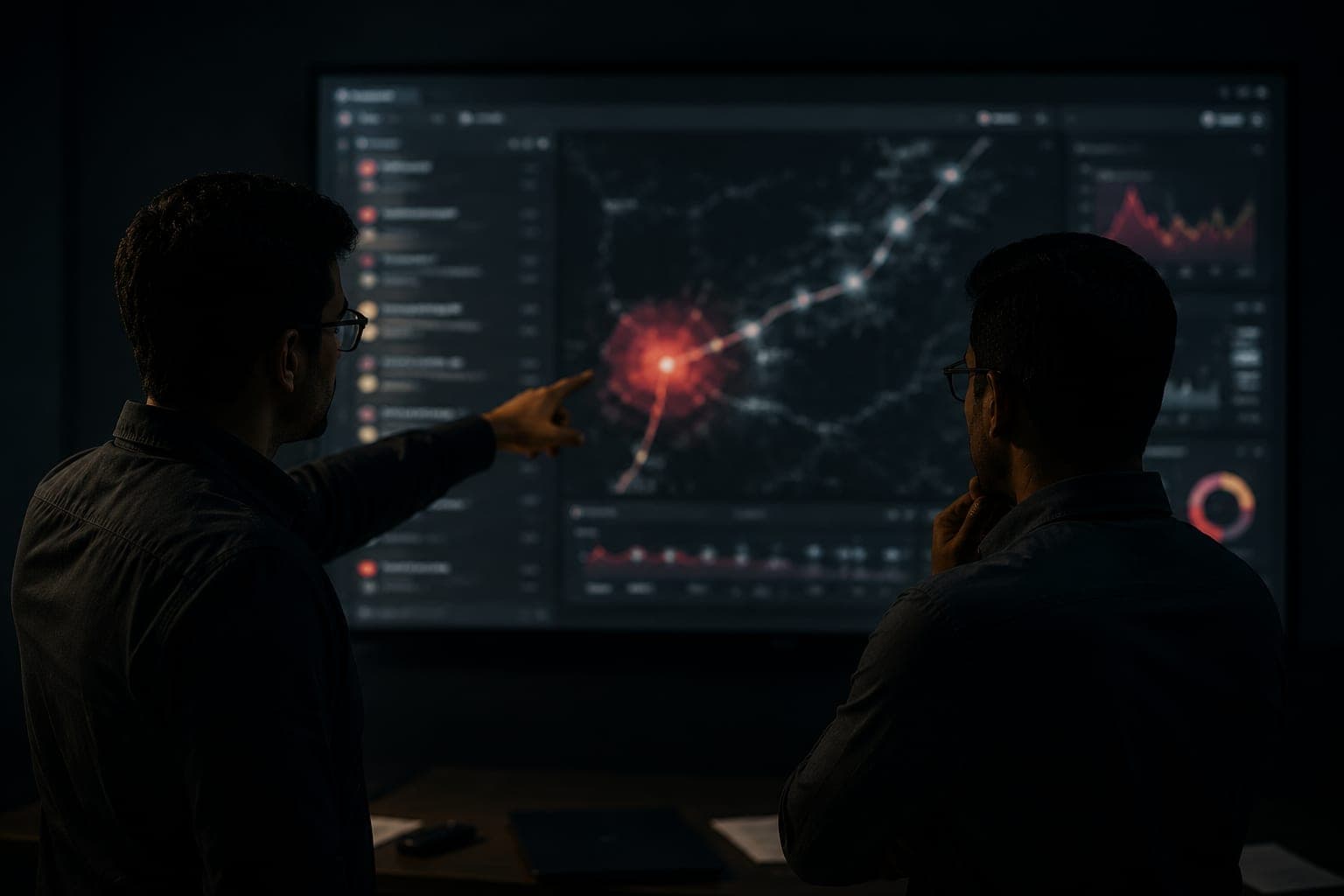
AI first. Hardware because the AI needs it to be real.
We are not purely a software company, and we are not a drone company either. AI is the scalable core; drone hardware is a genuine, deliberately focused part of the business that keeps that AI grounded in real flight data.

AI & software
The scalable core
Autonomous flight planning, AI-assisted defect detection, risk scoring, and a comparison engine that turns evidence from more than one source into a single calibrated finding make raw evidence comparable, defensible, and prioritised. This is where the long-term value compounds - it is not tied to any one piece of hardware, and it is designed to take in more evidence sources as the platform matures.

Hardware
The proving ground
We design, build, and test our own drones and ground-control tooling in-house, at a deliberately focused scale. Drone hardware alone is only moderately scalable and increasingly commoditised - we invest in it anyway, because an AI model is only as good as the real flight data it learns from, and there is no substitute for building and flying the thing yourself.
Six concrete deliverables, not a dashboard full of pixels
Each of these is an output an integrity team can act on directly - the most concrete, valuable part of the platform, so it gets room to breathe.

Prioritised inspection target list
A ranked list of segments or assets ordered by risk and change, so scarce inspection effort points at the highest-value locations first instead of being spread uniformly.
Located, mapped findings
Every flagged location is mapped with its evidence attached, so an engineer can navigate straight to it rather than work from a rough description.
What changed since last time
A clean comparison against the previous inspection that isolates what is new or evolving from the static features already known - so nobody re-derives last year’s findings by hand.
An auditable record
A durable record of what was observed, when, and on what evidence - so the reasoning behind every finding can be reviewed later rather than living only in an engineer’s memory.
Report-ready output
Findings structured to feed the reporting your team already produces, removing the manual transcription step between field observation and a finished record.
A defensible confidence level
Each finding carries a visible confidence level and the evidence behind it, so it can stand up to review from a chief engineer, a regulator, or an incident post-mortem.
Illustrative integrity console
Illustrative finding detail
Why this was flagged
Cycle-over-cycle
Cycle 06
Baseline
Cycle 07
+21% change
Every number here traces back to a specific signal - an engineer can open the source evidence, not just trust the score.
Built to speak your integrity department’s language
Sentrix is designed to fit the frameworks a serious operator already runs its integrity and reporting programme against - so its output slots into your governance rather than sitting beside it.

Managing System Integrity for Hazardous Liquid Pipelines
Managing System Integrity of Gas Pipelines
Asset management systems
India pipeline integrity & reporting requirements
Measurement-based methane reporting framework
Alignment to these frameworks is a design input, not a checkbox added later - and we extend to further jurisdictions as we work with operators in them.
Auditable by design
Every finding carries its evidence and a visible confidence level, so it can stand up to review from a chief engineer, a regulator, or an incident post-mortem. No black-box scores that have to be trusted on faith.
Your asset data stays yours
Asset coordinates, inspection findings, and site detail are commercially and security-sensitive. Data residency, access control, and retention are agreed with the operator up front - we treat your data as yours, not ours to publicise.
Proprietary, patent-pending technology
The methodology behind how Sentrix makes evidence comparable and findings defensible is proprietary, and a patent application has been filed to protect it. We don’t publish the specific technical implementation - that restraint is deliberate, not a gap.
Let's find out how much time your decisions could get back.
Tell us about your pipeline network or your refinery site and inspection cycle. We’ll walk you through how Sentrix would prioritise it, where it could reduce manual effort and turnaround time, and be honest about what we can and can’t yet prove.