

How we earn a skeptical engineer’s trust.
Sentrix is built on tested claims, not assumed capability. This page is how we work - with practising engineers, with evidence attached to every finding, and with honesty about what we do and don’t do. It is a genuine differentiator, and we publish it with confidence.
A capability you assume is a risk you’ve hidden. A capability you test is a claim you can defend.
Everything below is framed as a claim with a defined test, not a finished result. As each test concludes, we update its status here - and we report outcomes whether they confirm the claim or break it.
We tested our thinking against Indian Oil Corporation’s own engineers.
This page describes a philosophy - validate with practising engineers, attach evidence to every finding, say plainly what we don’t do. Our visit to IOCL’s Southern Regional Pipeline (SRPL) division in Ramanathapuram, and to an active GAIL pipeline construction site nearby, is where that philosophy actually got tested: real engineers, real infrastructure, real questions we didn’t have perfect answers to yet.
Read what we learned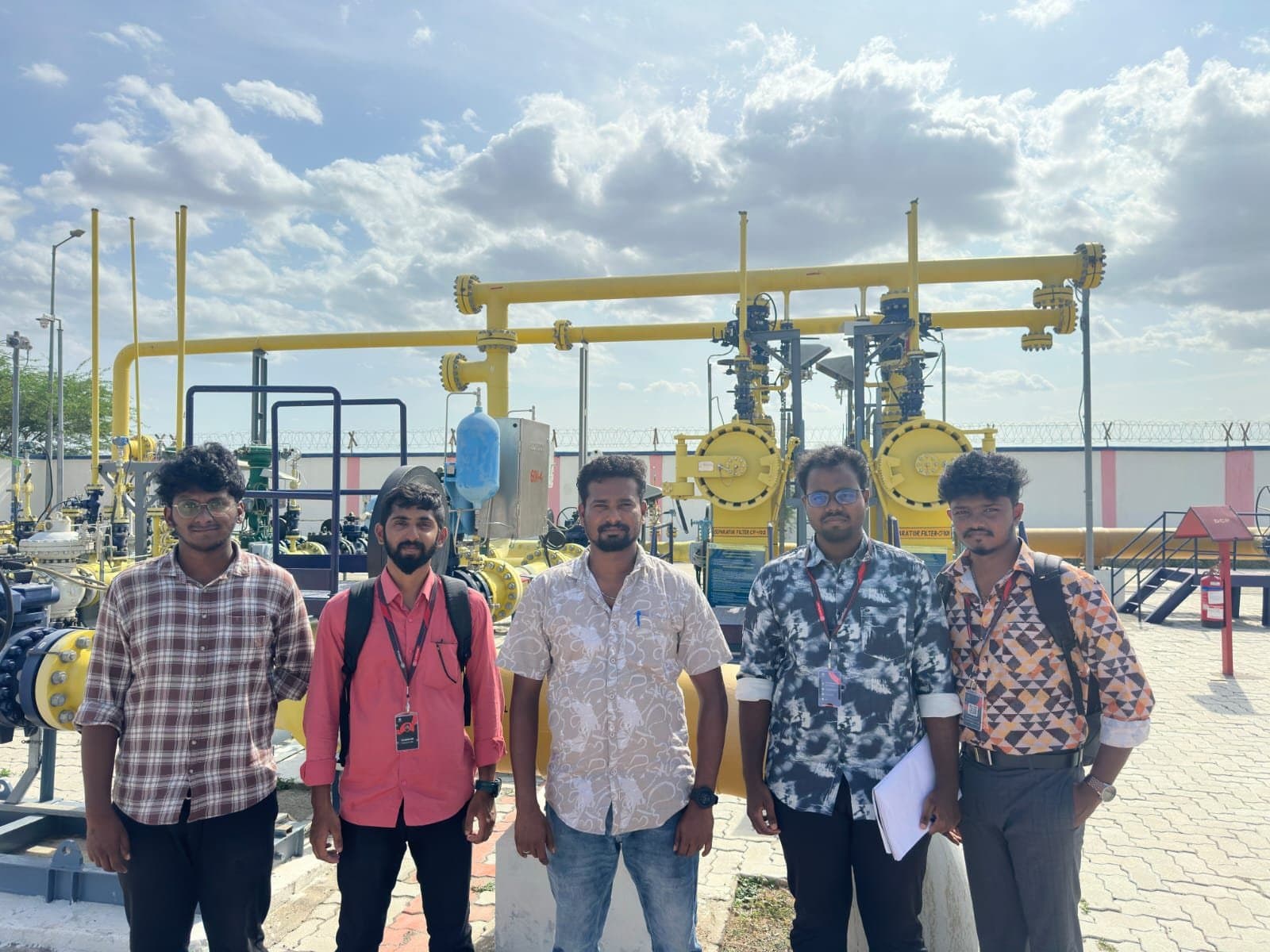

Flight to decision, in one interactive walkthrough
The same flow described throughout this site - drone evidence, standardised by Sentrix, reviewed by an engineer, resolved into a decision - shown here as a small interactive 3D scene. Drag to orbit, or step through it below.
Today, most rights-of-way are still walked on foot with a handheld gas detector. It works - but it is slow, it covers a small stretch at a time, and it depends on who is walking and what they happen to notice.
Illustrative, time-lapsed simulation - drag to orbit, tap a step to jump to it. Coordinates, timings, and the findings shown are for demonstration only, not a real network or engagement.
Four principles behind every claim we make
These are not slogans. They are the standard we hold our own product to before we ask an operator to trust it.
We validate with practising engineers
Every claim is tested against how integrity engineers actually work, not against a lab ideal. If it does not hold up in a real workflow, it does not ship.
We attach evidence to every finding
Nothing Sentrix outputs is a bare score. Each finding carries the evidence behind it, so the engineer stays in control of the judgement and can defend it later.
We say plainly what we don’t do
Sentrix does not measure pipe-wall thickness and does not sense underground. Naming a tool’s limits is the clearest signal that its capabilities are real.
We publish outcomes honestly
We state what we are proving and report the result either way - including when it forces us to change course. Confirmation and disconfirmation are both worth publishing.
What Sentrix is not
Naming what we don’t do costs us nothing and tells you exactly what to expect - the same discipline we apply to every claim on this page.
It does not detect leaks directly
Leak detection is a different, already-solved problem - hydraulic and acoustic monitoring systems already do this well. Sentrix works from inspection evidence, not real-time flow monitoring.
It does not see through insulation or measure wall thickness
Sentrix does not replace ultrasonic thickness gauging, radiography, or other direct non-destructive testing. It works from the visual and sensor evidence an inspection actually captures.
It does not make engineering decisions
Your engineer always makes the call. Sentrix makes the evidence in front of them faster to trust and compare - it does not replace their judgement, sign off on a finding, or decide what action to take.
What we prove before we claim it
If any of these turns out to be false, Sentrix has to change. That is exactly why we name them explicitly rather than assume them.
Active validationAll five claims below are currently being tested with practising engineers - status updates here as each concludes.
Prioritisation actually changes what an engineer would do.
We work directly with practising integrity engineers to test whether a ranked target list changes their decisions - or whether existing judgement already suffices. If it does not help, it is not worth shipping.
Comparing one cycle to the last is reliable enough to trust.
We check our cycle-over-cycle comparison against known, ground-referenced change, so a difference we surface reflects something real rather than noise - and we characterise where it is dependable and where it is not.
A finding holds up against real ground truth.
We test our findings against independently confirmed conditions to understand where they are dependable and where they are not - because an honest statement of limits is worth more than an accuracy headline.
Engineers will act on an evidence-backed finding.
We put findings in front of domain experts, with and without their supporting evidence, and measure whether the evidence changes their willingness to act - because a finding no one trusts is a finding no one uses.
The platform gives a working engineer real time back per cycle.
We compare the current review-and-report workflow against a Sentrix-assisted one on the same data, isolating exactly where time is saved and where it is not, rather than asserting a savings figure.
Where we invite collaboration
We work with academic and industry partners on the harder questions in pipeline integrity and inspection decision-making - from validating findings against real ground truth to understanding what makes an engineering team genuinely trust an automated finding. If that overlaps with your work, we’d like to hear from you - including if you think one of our claims is wrong.
Work on these with us.
If you’re a researcher, lab, or integrity team working on pipeline inspection, decision support, or validation methodology, we’d like to hear from you - including if you think one of our claims is wrong.