
Field notes on pipeline integrity, methane, and gas infrastructure.
Category authority, written plainly. These posts explain the domain we work in - they are not product-performance claims. Each opens with a direct answer and cites its sources.
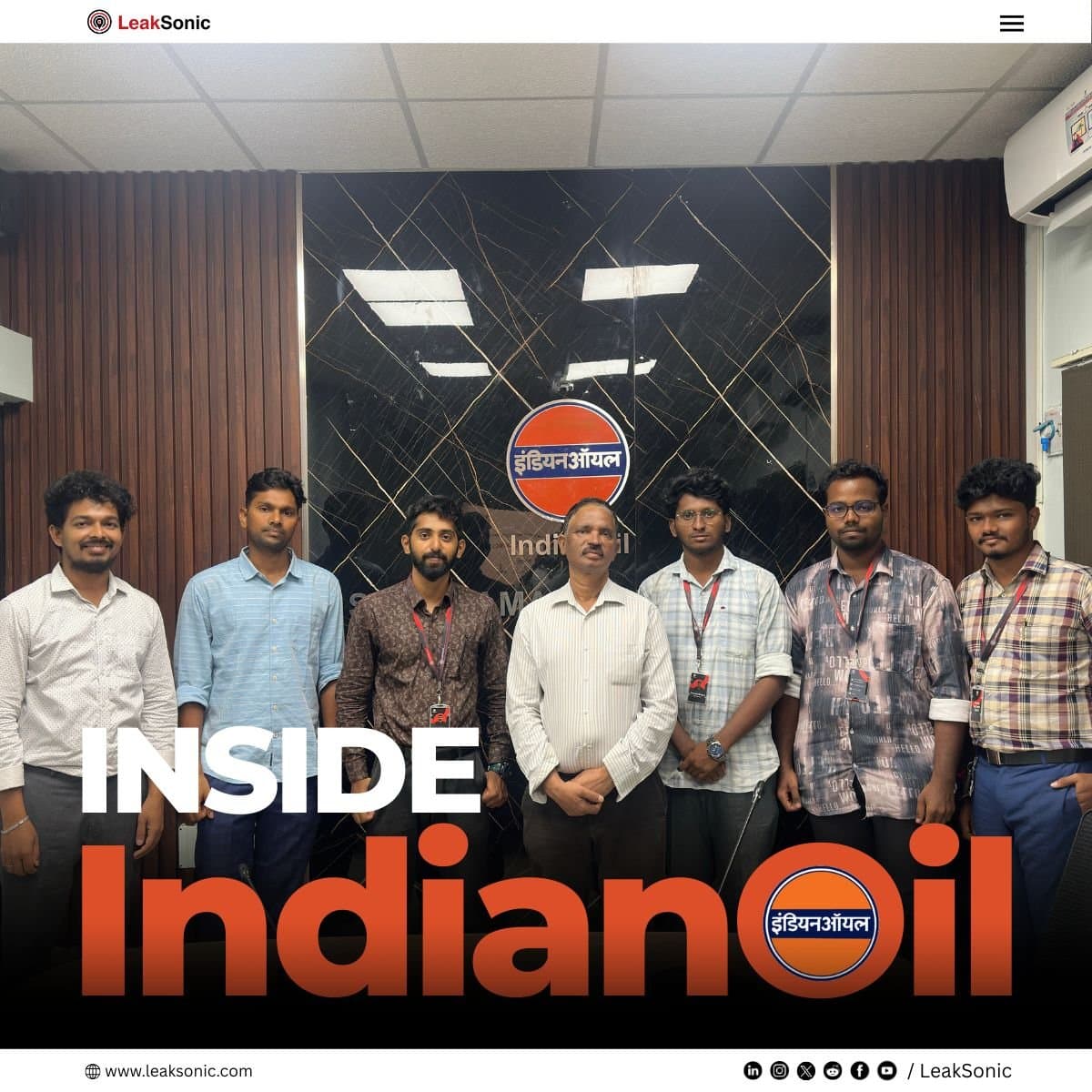
Inside Indian Oil: presenting Sentrix to IOCL Southern Regional Pipeline
LeakSonic's founding team met with Indian Oil Corporation's Southern Regional Pipeline (SRPL) division in Ramanathapuram to present Sentrix, our pipeline integrity intelligence platform - and came away with real engineering validation and a path toward field testing.
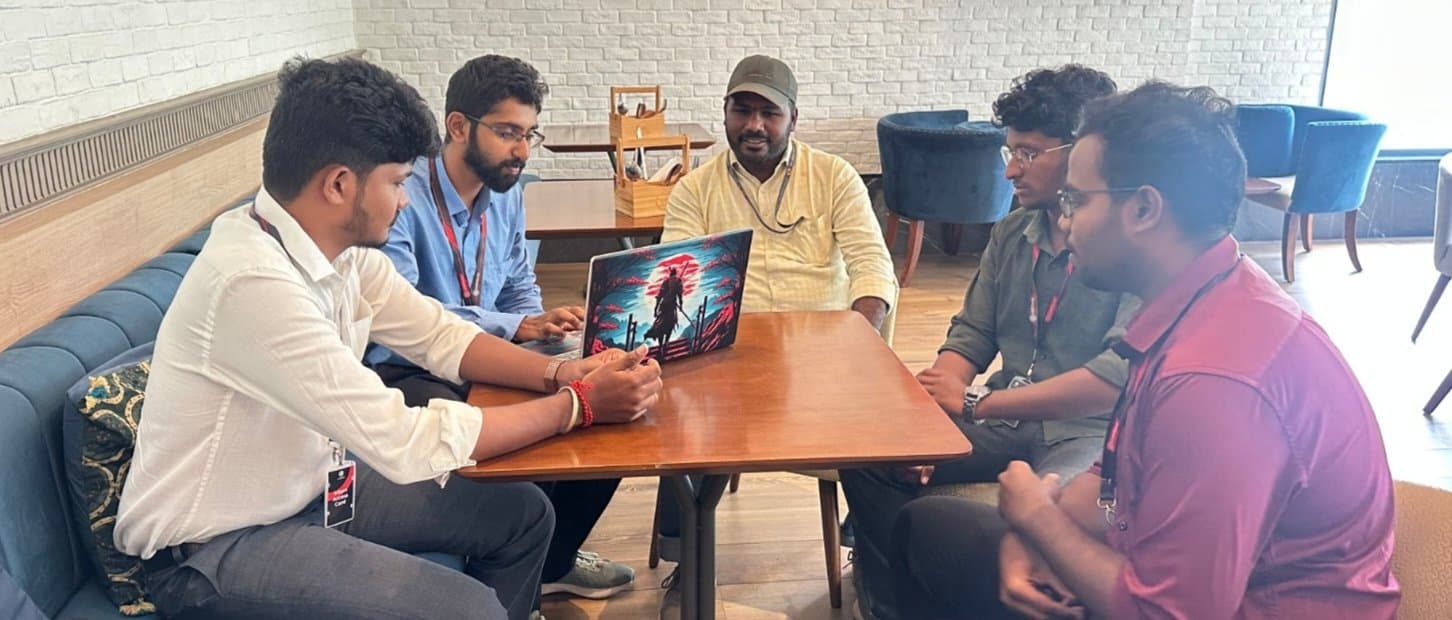
On-site with GAIL: learning pipeline construction at the L&T Bypass
LeakSonic's team visited an active pipeline construction site along the Larsen & Toubro Bypass project, learning directly from GAIL (India) Limited Senior Manager Ashwin Kumar A. about real-world pipeline construction, HDD drilling, and commissioning.
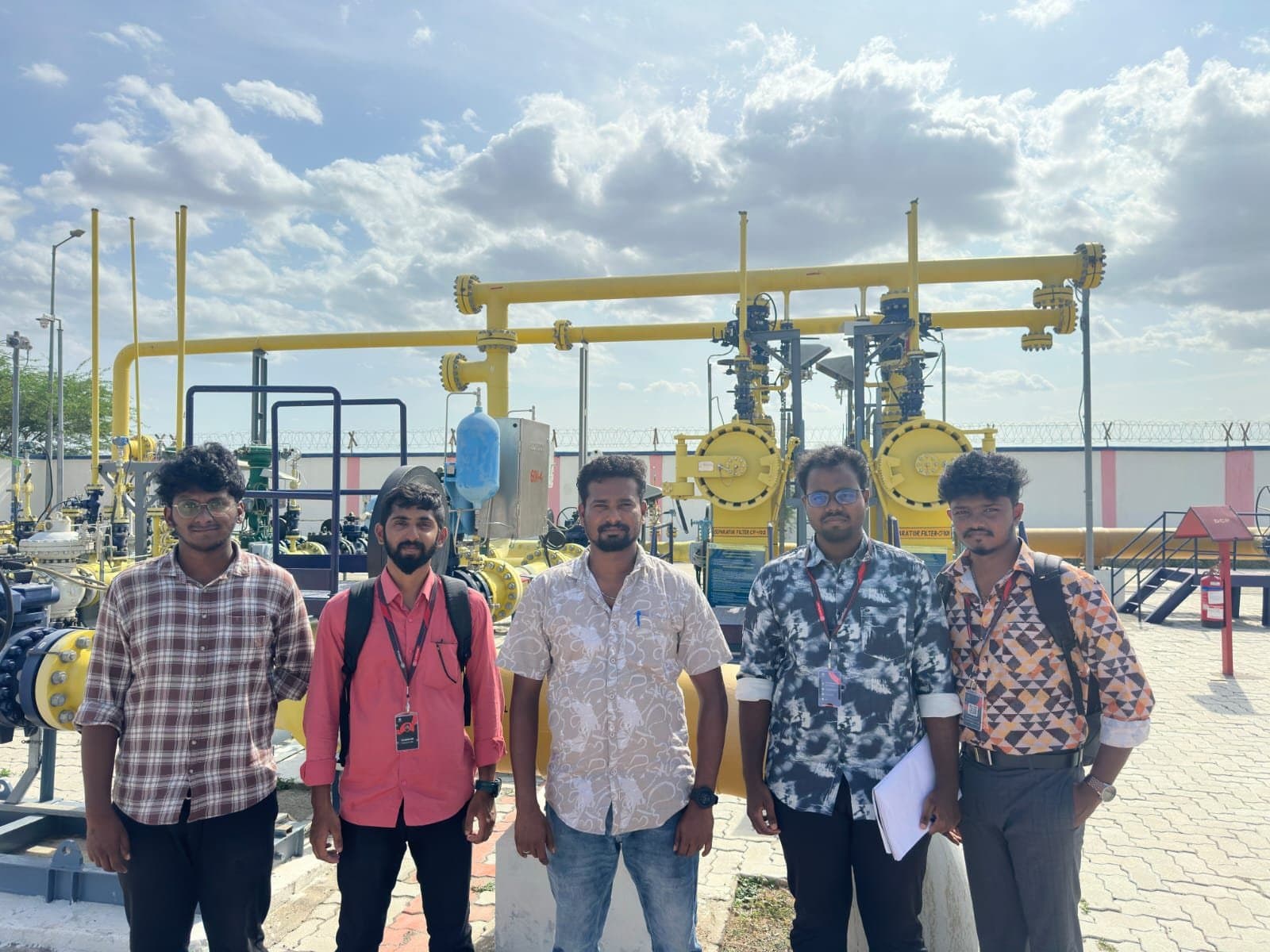
SV and IP stations: the pipeline infrastructure that keeps gas safe
Sectionalizing Valve (SV) stations and Intermediate Pressure Regulation (IP) stations are the unsung infrastructure that keeps gas pipeline networks safe, balanced, and running - seen firsthand during LeakSonic's field visit with Indian Oil Corporation.
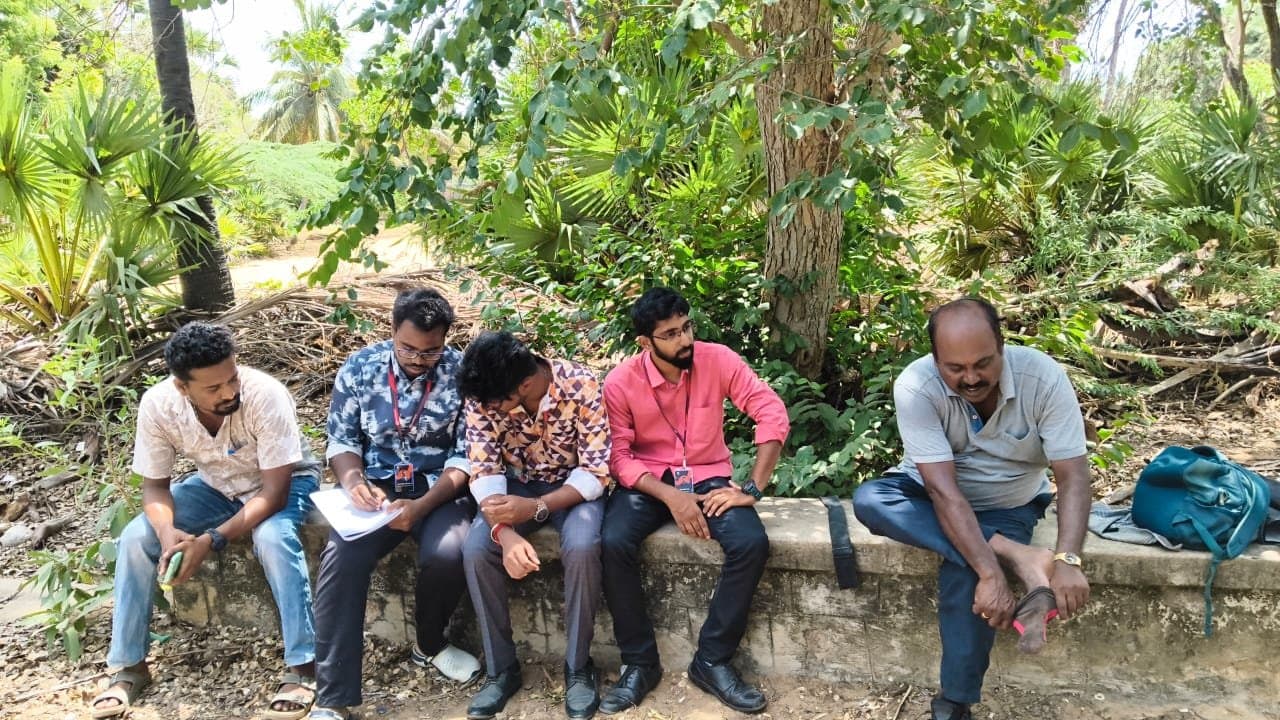
What a Line Security Man actually does on pipeline patrol
Understanding the vital, often-overlooked role of the Line Security Man (LSM) in keeping India's pipeline right-of-way corridors safe, monitored, and connected to local communities - learned firsthand during LeakSonic's field visit with Indian Oil Corporation.
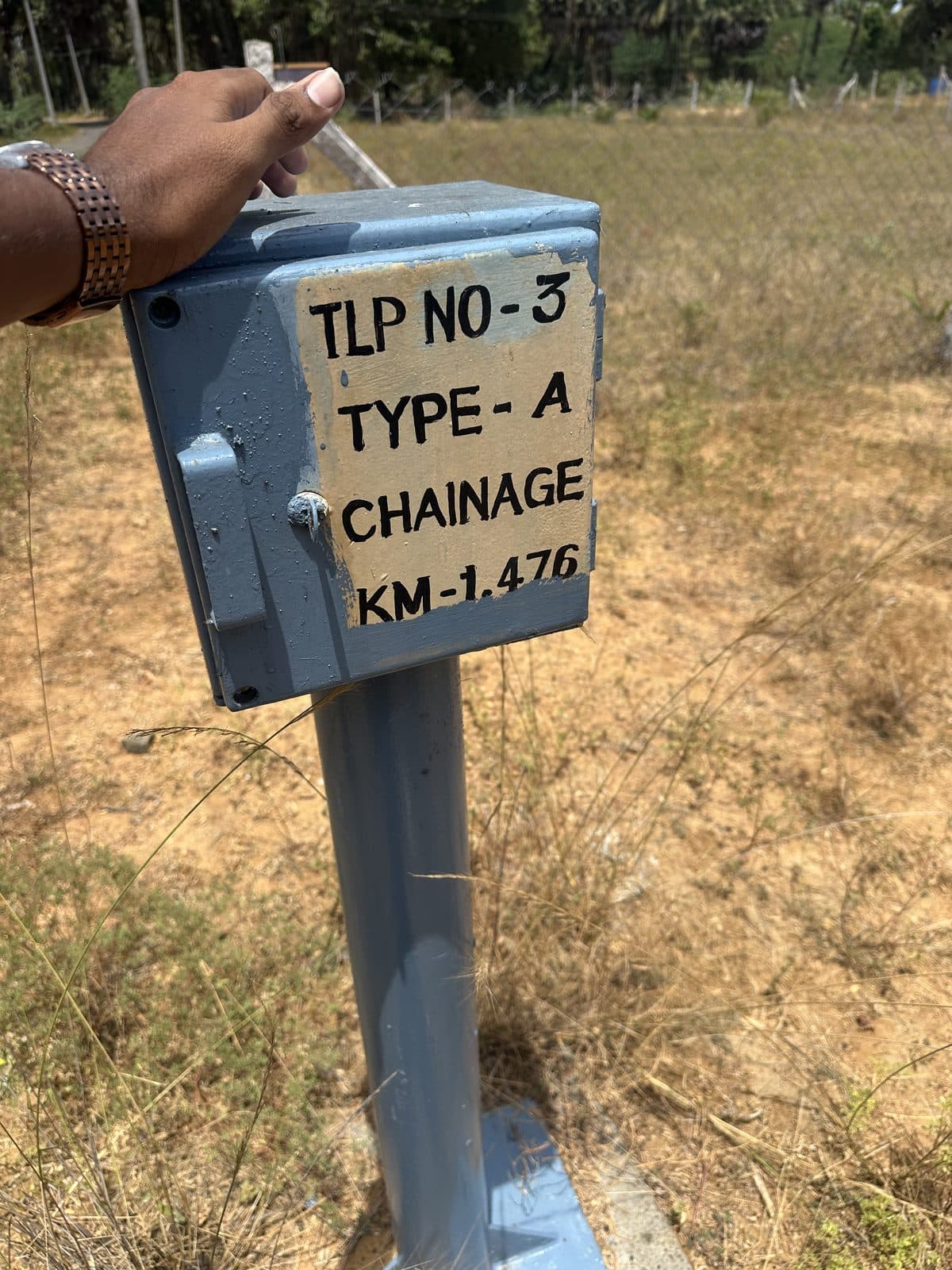
What are cathodic protection test lead points, and why they matter
What are cathodic protection test lead points, and why do they matter? A look at how underground pipelines are protected from corrosion - and monitored - decades after they are buried, seen firsthand during LeakSonic's field visit with Indian Oil Corporation.
Drone inspection vs. rope access and scaffolding: what actually drives the cost difference
Rope access and scaffolding both do something a drone cannot - close-contact, hands-on inspection and repair. The real comparison is not "which one wins," it is where the cost actually sits: mobilisation and access time versus flight time, and how much of a turnaround inspection scope genuinely needs contact versus a first-pass screen.
A founder's guide to deep-tech grant programs for energy infrastructure startups in India
Beyond the oil-and-gas-specific PSU programs, India runs a broader set of deep-tech and dual-use grant and incubation schemes - NIDHI-PRAYAS, iDEX, MSME innovative schemes, Smart India Hackathon, and DPIIT recognition under Startup India - that an energy-infrastructure hardware-and-software startup should know exist, even if not every one is the right fit at every stage.
PNGRB, Integrity Management Systems, and what CGD/gas pipeline operators should expect
PNGRB increasingly frames pipeline safety obligations around a formal Integrity Management System - alongside HAZOP studies, Quantitative Risk Assessment, and Emergency Response Plans - rather than a looser set of inspection guidelines. As CGD networks and gas-pipeline integration (including biogas and CBG connections) expand, operators should expect that framing to keep tightening, and inspection evidence that does not map cleanly to an IMS becomes a growing liability.
What "dual-use" actually means for drone and AI infrastructure technology
Dual-use is a specific, well-defined technology category - not a marketing word - describing capability built for one purpose that has genuine, defensible relevance to another, often civilian and defence. Understanding what actually qualifies matters both for honest positioning and for programs like iDEX that fund it specifically, and we lay out where our own architecture genuinely fits that category and where it plainly does not, today.
The future of defence drones: autonomy, swarms, and AI-driven intelligence
Defence and dual-use drone programmes worldwide are shifting from single-aircraft, human-piloted missions toward autonomous, AI-driven, and increasingly swarm-coordinated operation. This piece looks at that broader industry trend and where LeakSonic - an oil-and-gas-focused AI and drone hardware company today - honestly stands relative to it: genuinely interested in the long term, with no current defence deployment to claim.
How AI-driven inspection is already changing gas pipeline and refinery integrity work
The shift toward AI-assisted inspection in oil and gas is not a future scenario - it is underway now, driven by a structural mismatch between how fast pipeline and refinery assets are growing and ageing and how fast manual inspection review can keep pace. This piece looks at what is actually changing, what remains unsolved, and where LeakSonic's own AI-driven, drone-hardware-backed approach fits into that shift honestly.
Introducing Meridian GCS: the ground control station we are building for ourselves first
Building and flying our own drones for Sentrix surfaced a gap: existing ground-control tools are built around flying one aircraft well, not around planning, repeating, and collaborating on inspection missions at scale. Meridian GCS is our answer - a ground-control station in active development, described honestly here as a work in progress, not a shipped product.
What an undetected methane leak actually costs: a free value estimator
A methane leak has two costs that are easy to state separately and rarely put side by side: the commercial value of the gas that never reached a customer, and the climate impact of the methane released. Both scale directly with one variable most operators actually control - how long the leak goes undetected. We built a free Methane Emissions Value Estimator to make that relationship concrete.
Planning a drone inspection mission: what actually drives flight time and battery count
How long a drone survey takes and how many batteries it needs comes down to a small set of variables - distance to cover, required image overlap, cruise speed, and endurance - that most planning still does by rough estimate. We built a free Drone Mission Coverage & Flight Time Planner to make that arithmetic explicit for both pipeline corridors and refinery sites.
Why AI and drones, together, are going to change how the world inspects infrastructure
Drones made evidence capture cheap. AI is what makes that evidence turn into a decision at scale. The combination - not either technology alone - is what will actually change how critical infrastructure gets inspected over the next decade, and the businesses that will matter most are the ones that own the intelligence layer, not just the aircraft.
From two thickness readings to a suggested inspection interval: a free remaining-life calculator
Two wall-thickness readings and the years between them are enough to compute a corrosion rate, a remaining corrosion allowance, a projected remaining life, and - using the half-life convention common across API 510/570/653-style programmes - a suggested next-inspection interval. We built a free calculator that does all of it transparently, one step at a time.
How much does manual inspection review actually cost? A free ROI calculator
Most operators can name their inspection budget but not the hidden cost of manual evidence review and reporting. We built a free Inspection Cost & ROI Calculator so any pipeline, City Gas Distribution, or refinery team can put a number on their own review-hour cost - using assumptions they control, not a vendor-asserted figure.
What actually determines inspection priority? A free scoring tool to see it in practice
Risk-based inspection prioritisation rests on a small number of factors - asset age, construction risk, consequence area, time since last inspection, and history of anomalies - but most engineers outside a formal RBI programme have never seen how those factors combine into a score. We built a free Inspection Priority Score Estimator to make that logic tangible in under a minute.
Where does your inspection programme sit on the path to measurement-based reporting?
The shift from estimated to measured methane reporting under frameworks like OGMP 2.0 is well underway, but most operators have no quick way to see where their own workflow currently sits on that path. We built a free five-question Integrity & Methane Reporting Readiness Assessment to give a directional answer in under two minutes.
Funding deep-tech in energy and climate infrastructure: the landscape for India-built startups
Deep-tech startups building physical-world infrastructure technology - pipeline inspection, industrial sensing, climate monitoring - sit at an intersection that increasingly interests government schemes, domestic seed funds, and international climate-tech and deep-tech accelerators alike. This piece maps that funding and support landscape as it applies to an India-built, globally-relevant energy infrastructure startup.
Digital twins for pipeline infrastructure: what the term actually means, and what it takes to build one honestly
A digital twin for pipeline infrastructure is a continuously updated digital representation of a physical network's actual condition, not just its as-built geometry - the distinction between a static GIS map and a genuine digital twin is whether the model reflects current, evidence-backed reality or a snapshot from whenever it was last surveyed. Most pipeline networks today have the former; building the latter is a harder, more valuable, and more commonly overclaimed problem.
The drone industry in oil and gas inspection: market structure, players, and where the value actually sits
The oil and gas drone inspection market splits into three distinct layers - hardware manufacturers, flight-and-imagery service providers, and the data/decision software that turns raw inspection footage into action - and most of the commercial value increasingly sits in the third layer, not the first two. Understanding this structure explains why "buying a drone" and "buying pipeline inspection intelligence" are very different purchases.
Gas leak detection methods: a complete overview from handheld sniffers to satellites
Gas leak detection spans a spectrum of methods that trade off sensitivity, coverage, and cost: handheld and vehicle-mounted surveys detect small leaks precisely but cover ground slowly; fixed sensors watch one point continuously; aerial methods screen long corridors quickly at moderate sensitivity; and satellites cover everything but only see large emitters. No single method wins on all three axes - which is why serious leak detection programs are built as layered systems, with each layer directing the next.
Global gas infrastructure expansion: where pipelines are being built and what it means for inspection
Gas infrastructure is expanding on every populated continent - transmission build-outs across Asia, LNG-linked pipeline networks, city gas distribution growth, and early hydrogen-ready corridors in Europe - even as mature networks in North America and Europe age into their most inspection-intensive decades. The combined effect is a global gap between kilometres of pipe that need watching and the inspection capacity available to watch them, and that gap, not any single region's growth, is the defining trend.
How global oil and gas majors are committing to measured methane reporting
A growing number of the world's largest oil and gas companies have publicly signed on to OGMP 2.0, the UN Environment Programme's framework requiring measurement-based rather than estimate-based methane emissions reporting. That shift - from calculated to measured emissions - is a structural change in what counts as credible reporting, and it is reshaping what inspection and monitoring technology operators need across their upstream, midstream, and downstream assets.
How drones are transforming oil and gas operations: the use cases that actually stuck
Drones have moved from novelty to standard practice across a specific set of oil and gas use cases - pipeline right-of-way patrol, flare stack inspection, storage tank and terminal inspection, offshore platform survey, and emissions detection - because in each case they replace a slower, costlier, or more dangerous manual method. The use cases that stuck share one trait: the drone removes a person from height, confined space, or long windshield time, and produces data a team can act on.
India's drone ecosystem explained: DGCA rules, the Drone Federation of India, Digital Sky, and certification
India's drone ecosystem is built on a defined regulatory and institutional stack: the Drone Rules 2021 administered by the DGCA, the Digital Sky online platform for registration and permissions, type certification for drone models and remote pilot certification for operators, an airspace map of green, yellow, and red zones, and an industry body - the Drone Federation of India - representing the sector. For anyone using drones for oil and gas inspection, understanding this stack is a prerequisite, not an optional extra.
India's national oil and gas companies and their pipeline networks: ONGC, IndianOil, HPCL, BPCL, and GAIL
India's oil and gas pipeline infrastructure is operated by a small set of national companies with distinct roles - ONGC in upstream exploration and production, IndianOil, HPCL, and BPCL across refining and product pipelines, and GAIL as the country's principal gas transmission and distribution operator. Understanding this structure is essential context for any inspection or integrity technology company working in the Indian market.
Offshore platform drone inspection: how UAVs changed structural survey over open water
Offshore platform inspection historically required rope-access teams working at height over open water - among the most hazardous routine work in oil and gas. Drone-based structural survey now handles much of the visual and thermal evidence-gathering for splash zones, underdecks, flare booms, and topsides, cutting both safety exposure and the offshore person-hours that make this work so expensive - while the interpretation of that evidence remains firmly an engineering judgement.
Startup and innovation schemes in Indian oil & gas: a guide to GAIL Pankh, IndianOil Ankur, HPCL, and ONGC programs
India's national oil and gas companies run a growing set of dedicated startup and innovation programs - GAIL's Pankh, IndianOil's Ankur, HPCL's startup initiatives, and ONGC's Start-up policy among them - aimed at sourcing and scaling deep-tech solutions for pipeline integrity, drone inspection, emissions monitoring, and digital operations. This guide explains what each program is designed to do and how a deep-tech startup typically engages with them.
How operators budget and plan pipeline inspection frequency
Pipeline inspection budgets are typically allocated across a portfolio of methods - inline inspection, direct assessment, cathodic protection surveys, aerial and surface monitoring - constrained by finite capital and operating expenditure and shaped by regulatory minimums, network risk profile, and consequence-area classification. Getting this allocation right is as much a resource-optimisation problem as an engineering one.
The pipeline inspection contractor landscape: who does what across a typical inspection program
A typical pipeline integrity inspection program involves several distinct types of contractor and service provider - inline inspection vendors, direct assessment and coating survey specialists, aerial and drone service providers, and increasingly, data and decision-intelligence software vendors - each responsible for a different piece of the overall inspection workflow. Understanding this division of labour helps explain why no single vendor typically owns the whole process.
Evaluating a pipeline inspection technology vendor: the questions that actually separate real capability from a demo
A polished demo tells an operator very little about whether a pipeline inspection technology vendor will actually perform on a real network under real conditions. A more useful evaluation focuses on validation methodology, false positive and false negative rates, data governance posture, integration with existing systems, and how honestly the vendor represents its own current limitations.
The pipeline integrity engineer: what the role involves and how the job is changing
A pipeline integrity engineer is responsible for keeping a pipeline network safe and compliant across its life: assessing threats, planning and interpreting inspections, prioritising repairs, and defending those decisions to management and regulators. The role sits at the intersection of corrosion science, materials engineering, risk analysis, and increasingly data work - and the day-to-day is shifting from collecting and reconciling data toward reviewing evidence and exercising judgement on it.
Pipeline pigging explained: what pigs are, why the name, and what each type does
A pipeline pig is a device inserted into a pipeline and pushed along by the product flow itself, performing work as it travels - cleaning debris, separating product batches, removing liquids, or, in the case of instrumented "smart" pigs, measuring the pipe wall from the inside. Pigging is one of the oldest and most economical pipeline maintenance techniques precisely because the pipeline provides the propulsion: the product already flowing through the line carries the tool.
Storage tank and terminal drone inspection: replacing scaffolding, ladders, and confined-space entry
Storage tank inspection combines three of the most hazardous elements of industrial work - height, confined space, and hydrocarbon atmosphere - which is why drones took hold quickly at tank farms and terminals. External shell and roof surveys, internal inspections by collision-tolerant indoor drones, and thermal scanning for product level and insulation defects now cover much of the evidence-gathering that previously required scaffolding, mobile platforms, or human entry into the tank itself.
What is City Gas Distribution (CGD)? India's fastest-growing gas infrastructure explained
City Gas Distribution (CGD) is the network infrastructure that delivers natural gas within a city or defined geographical area - piped natural gas to homes and businesses, gas to industry, and CNG to vehicles - fed from transmission pipelines at city-gate stations. India has authorised CGD development across 300+ geographical areas covering most of its population, making CGD the fastest-growing layer of the country's gas infrastructure and a fast-growing inspection and integrity challenge in its own right.
What "AI-powered" actually means in pipeline integrity software - and what it does not
In pipeline integrity software, "AI-powered" most commonly and defensibly means machine learning models that fuse multiple imperfect signals - imagery, sensor readings, historical inspection data - into a ranked, evidence-linked assessment of where inspection attention should go next. It does not mean autonomous decision-making, and credible systems in this space are explicit about the fact that a trained engineer, not the model, makes the final call.
Corrosion under insulation (CUI): why insulated pipe is a blind spot for standard inspection
Corrosion under insulation (CUI) occurs beneath thermal insulation on above-ground piping and equipment, where moisture becomes trapped against the pipe surface and corrosion progresses hidden from direct view. It is considered one of the highest-consequence, hardest-to-detect corrosion mechanisms in the oil and gas industry precisely because the insulation that causes the problem also conceals it from routine visual inspection.
Digital transformation in pipeline operations: what is actually changing, beyond the buzzword
Digital transformation in pipeline operations, stripped of the buzzword, refers to a set of concrete, measurable shifts: moving inspection and maintenance records out of paper and disconnected spreadsheets into unified digital systems, replacing purely calendar-based inspection scheduling with risk-informed prioritisation, and making inspection findings traceable to specific evidence rather than summarised into opaque reports. These are operational and data-governance changes as much as technology purchases.
External corrosion on buried pipelines: causes, warning signs, and controls
External corrosion is the gradual, electrochemical loss of pipe wall metal on the outside surface of a buried pipeline, driven by soil moisture, coating breakdown, and inadequate cathodic protection. It remains one of the most common root causes of pipeline incidents worldwide because it is slow, silent, and concentrated at coating defects that are invisible from the surface until wall loss is already significant.
Where pipeline inspection is heading: from periodic checks to continuous risk awareness
The clearest long-term trend across pipeline integrity technology is a shift from periodic, point-in-time inspection toward continuous or near-continuous risk awareness - driven by cheaper and more frequent satellite revisit, expanding aerial inspection capability, and data fusion methods that can turn multiple imperfect, frequent signals into a reliable, current risk picture rather than relying on infrequent but precise single-method snapshots.
Ground movement and subsidence: the slow-motion pipeline threat that erosion and mining leave behind
Ground movement - subsidence, landslide, erosion, and seismic displacement - can stress a pipeline mechanically without any coating or metal-loss defect being present at all, making it a threat category that standard corrosion-focused inspection methods have no way to detect. It develops slowly enough in most cases that repeated, spatially precise ground-position monitoring over time is the only realistic way to catch it before stress accumulates to a dangerous level.
Hydrogen pipelines and integrity: why hydrogen changes the inspection problem
Transporting hydrogen through pipelines - whether newly built or repurposed from natural gas service - introduces integrity challenges distinct from conventional gas transmission, most notably hydrogen embrittlement, a mechanism where hydrogen atoms diffuse into steel and reduce its ductility and fatigue resistance. As hydrogen blending and dedicated hydrogen infrastructure expand globally, inspection and integrity programs are adapting to account for a failure mode conventional natural gas pipelines were never designed around.
The economics of methane leak detection: why finding leaks faster pays for itself
Methane is both a lost, sellable product and a potent greenhouse gas, which means faster leak detection has a direct financial case independent of any environmental or regulatory motivation - the same avoided emission that reduces climate impact also represents gas that was never lost to atmosphere. As methane-specific regulation tightens globally, the economic and compliance cases for faster detection are converging rather than competing.
Microbiologically influenced corrosion (MIC): why bacteria are a pipeline integrity threat
Microbiologically influenced corrosion (MIC) is metal loss caused or accelerated by the metabolic activity of microorganisms - most commonly sulphate-reducing bacteria - living in biofilms on a pipe surface. It produces some of the fastest and most localised corrosion rates seen in pipeline systems, and standard cathodic protection and coating defences do not reliably prevent it because the responsible organisms can create their own protective microenvironment beneath a biofilm.
Pipeline coating inspection methods: how operators assess coating condition without full excavation
Coating condition is one of the two variables, alongside cathodic protection performance, that determines external corrosion risk on a buried pipeline - and assessing it without excavating the entire pipeline requires a combination of indirect above-ground survey methods, direct assessment at statistically selected points, and increasingly, above-ground observation of surface indicators correlated with subsurface coating and corrosion condition.
Pipeline data blind spots: the gaps most integrity programs do not know they have
Most pipeline integrity programs carry real, structural data blind spots - non-piggable segments with no inline inspection history, corridors between scheduled patrols where days or weeks pass with zero observation, and disconnected data systems where inspection findings, repair records, and risk models do not talk to each other. These gaps are rarely visible until a failure retroactively reveals them.
Why pipeline failures still happen: the root causes behind incidents worldwide
Published incident data from regulators and industry bodies worldwide consistently attributes pipeline failures to a small number of recurring root causes: external corrosion, excavation and third-party damage, material or weld defects, and equipment or operational error. Most of these causes are not the result of unknown technology gaps - they recur because the detection and inspection methods available are periodic, partial, or too slow to catch a developing problem before it becomes a failure.
Pipeline inspection regulation around the world: how requirements compare
Pipeline inspection requirements vary significantly across jurisdictions in inspection frequency, permitted methods, and how risk-based alternatives to fixed schedules are treated - but nearly every major regulatory framework, from the US PHMSA rules to EU and Indian requirements, is converging on the same underlying principle: risk-informed inspection intervals rather than uniform fixed schedules for every pipeline segment regardless of actual condition.
Pipeline integrity KPIs: which metrics actually indicate program effectiveness
Many commonly tracked pipeline integrity metrics - number of inspections completed, kilometres surveyed, findings closed - measure activity rather than effectiveness, and can look strong even while real risk goes undetected. More meaningful indicators focus on detection-to-repair time, the proportion of the network with current data versus stale or absent data, and false positive and false negative rates for whatever detection methods are in use.
Right-of-way encroachment: the pipeline threat that has nothing to do with the pipe itself
Right-of-way encroachment - unauthorised construction, excavation, or structures near a pipeline corridor - is one of the leading causes of pipeline incidents worldwide, and unlike corrosion or material defects, it is a threat that originates entirely outside the pipe itself and can develop in days rather than years. Detecting it requires observing the corridor, not the pipeline, which places it outside what inline inspection or cathodic protection surveys can ever catch.
Inline inspection (smart pigging) vs. aerial and surface inspection: what each method actually sees
Inline inspection tools (smart pigs) travel inside a pipeline to directly measure wall thickness and detect metal loss, cracking, and deformation, delivering the most precise defect data available - but only for pipelines that are piggable and only at the frequency operators can afford to run them. Aerial and surface inspection see a different, complementary set of conditions: right-of-way encroachment, ground movement, methane plumes, and vegetation stress that inline tools cannot detect from inside the pipe.
Stray current interference: the corrosion threat that defeats normal cathodic protection
Stray current interference occurs when electrical current from an external source - DC transit systems, HVDC transmission, welding equipment, or another cathodic protection system - enters a pipeline and then discharges from it at an unrelated location, causing severe, highly localised corrosion at the discharge point. It is dangerous precisely because it can overwhelm a pipeline's own cathodic protection system and cause rapid metal loss at a location the CP design never accounted for.
What "audit-ready" pipeline data actually means under PNGRB, OGMP 2.0, and emerging standards
Audit-ready pipeline data means a finding that a regulator or an internal auditor can trace back to its underlying evidence - what was measured, when, by what method, and against what baseline - not just a conclusion asserted without support. As regulatory frameworks from PNGRB to OGMP 2.0 push operators from periodic, judgement-based reporting toward measurement-based, evidenced reporting, the bar for what counts as audit-ready data is rising in the same direction almost everywhere at once.
Data governance and IP: what to ask any pipeline inspection technology vendor
Before adopting any inspection technology, operators should get clear, written answers on four data-governance questions: who owns the raw inspection data and derived findings, where the data is stored and processed, how long it is retained, and what happens to it if the vendor relationship ends. These are commercial and security questions, not just legal boilerplate, because pipeline network data is sensitive infrastructure information regardless of which vendor is handling it.
What is a false positive rate, and why it decides whether inspection software gets used
A false positive rate is the proportion of an inspection or detection system’s alerts that turn out, on investigation, not to reflect a real issue - and in practice it is a more decisive factor in whether engineers actually adopt a system than raw detection sensitivity is. A highly sensitive detector that also floods engineers with false alarms gets ignored within a few cycles, which is why a workable inspection system has to be judged on the balance between catching real issues and not wasting an engineer’s limited time and trust.
RTK GPS explained: why centimetre positioning matters for change detection
RTK (Real-Time Kinematic) GPS resolves position to roughly one to three centimetres by using carrier-phase corrections from a nearby reference station, compared to the three-to-five-metre accuracy of standard consumer GPS. For pipeline change detection, that precision is not a nice-to-have - it is the specific technical requirement that determines whether a difference between two inspection flights reflects a real surface change or is simply positioning error, which is why any change-detection claim is only as credible as the positioning system underneath it.
Methane regulation and reporting: a global comparison
Methane regulation is converging globally on the same direction - from generic, estimate-based emissions reporting toward source-level, measured quantification - but the pace and mechanism differ sharply by region: the EU has binding methane import standards, the US EPA enforces a methane fee under the Inflation Reduction Act, and India regulates gas pipeline integrity primarily through PNGRB technical standards rather than a dedicated economy-wide methane price. Operators working across multiple jurisdictions increasingly need measurement-based evidence that satisfies more than one regime at once.
Risk-based inspection: how operators prioritise pipeline segments
Risk-based inspection ranks pipeline segments by combining the probability of a failure with the consequence if one occurred, so that inspection budget and effort are pointed at the segments carrying the most real risk rather than spread uniformly across an entire network. It replaces fixed-interval, walk-the-whole-line inspection with a structured, data-driven prioritisation that most regulators now expect for transmission pipelines and that operators increasingly need for growing distribution networks as well.
Cathodic protection explained: how it prevents pipeline corrosion
Cathodic protection prevents corrosion on buried steel pipelines by making the whole pipeline electrically negative relative to the surrounding soil, so it becomes the cathode rather than the anode of any electrochemical cell that forms - and cathodes do not corrode. It works alongside protective coating rather than instead of it, and its effectiveness is verified through pipe-to-soil potential readings taken at test posts along the route.
A field guide to vegetation stress as a pipeline leak indicator
Vegetation stress works as a pipeline leak indicator because sub-surface gas displaces oxygen in the root zone, stressing plants and changing how their canopy reflects light - a change measurable by vegetation indices before any visible browning. Indices such as NDVI and, more robustly over sparse cover, OSAVI capture this; published hyperspectral research reports methane-stress discrimination as early as ~21 days after exposure, with DNN classification reaching ~98.2% accuracy in controlled studies. It is a genuine, low-cost proxy - and, like every proxy, it has real limits.
BVLOS drone regulation in India: what’s actually approved today
Beyond-visual-line-of-sight (BVLOS) drone operations in India today flow primarily through government-sponsored consortiums and sandbox corridors with security clearance from the Ministry of Home Affairs, not through open solo commercial licensing. Real approved BVLOS activity has clustered around specific use cases and corridors - mineral survey in Ladakh, pharmaceutical delivery trials in Telangana, coastal monitoring in Andhra Pradesh - under DGCA oversight. Understanding this pathway matters for anyone planning long-linear-asset inspection such as pipelines.
How India’s City Gas Distribution expansion is reshaping pipeline inspection demand
India’s City Gas Distribution (CGD) network is being built out across 300+ geographical areas authorised through successive PNGRB bidding rounds, adding tens of thousands of kilometres of distribution pipeline over the coming years. That build-out is expanding the length of pipeline that must be inspected far faster than conventional inspection capacity can scale - turning inspection prioritisation from a nicety into a structural necessity.
TDLAS vs. thermal imaging vs. satellite methane detection: how they actually compare
TDLAS gives selective, quantitative methane concentration along a laser path and is best for airborne and handheld confirmation; thermal imaging is fast and wide-area but indirect and easily confounded; satellite methane sensing (TROPOMI-class) is continuous and free but far too coarse to localise a pipeline leak. None is a complete answer alone - they operate at different resolutions, confidence levels, and timescales, which is exactly why serious systems fuse them rather than picking one.
What is pipeline integrity management, and why does it matter for gas infrastructure?
Pipeline integrity management is the structured, lifecycle discipline of keeping a pipeline safe to operate - identifying threats such as corrosion and third-party damage, assessing risk, inspecting and repairing on that basis, and documenting the whole chain. For gas infrastructure it matters more than for most assets because the product is both a safety hazard and a potent greenhouse gas, and because regulators increasingly require measured, auditable evidence rather than estimates.
New posts, occasionally
No spam, no drip campaign - just an email when we publish something worth reading. Unsubscribe anytime.