
BVLOS drone regulation in India: what’s actually approved today
Beyond-visual-line-of-sight (BVLOS) drone operations in India today flow primarily through government-sponsored consortiums and sandbox corridors with security clearance from the Ministry of Home Affairs, not through open solo commercial licensing. Real approved BVLOS activity has clustered around specific use cases and corridors - mineral survey in Ladakh, pharmaceutical delivery trials in Telangana, coastal monitoring in Andhra Pradesh - under DGCA oversight. Understanding this pathway matters for anyone planning long-linear-asset inspection such as pipelines.
Beyond-visual-line-of-sight (BVLOS) drone operation is the regime that makes long-linear-asset inspection - pipelines, transmission lines, railways - economically sensible, because it removes the need to leapfrog crews along a route to keep the aircraft in sight. In India, BVLOS is permitted, but it is important to be accurate about how: approvals to date have flowed primarily through government-sponsored consortiums and designated sandbox corridors, coordinated with the Directorate General of Civil Aviation (DGCA) and cleared for security by the Ministry of Home Affairs (MHA), rather than through open, routine commercial licensing for solo operators. Anyone planning drone-based pipeline inspection needs to understand this pathway before assuming BVLOS is an off-the-shelf capability.
Why is BVLOS regulated so much more tightly than normal drone flight?
Within visual line of sight, a remote pilot can see and avoid hazards directly. Beyond it, the operator must demonstrate that the aircraft can detect and avoid other airspace users and stay safe without direct human observation. That is a materially harder safety case, and it intersects with national-security concerns about uncrewed aircraft operating over long distances and sensitive areas.
For those reasons, India - like most jurisdictions - treats BVLOS as a controlled expansion rather than a default freedom. The regulatory architecture under the Drone Rules provides for progressively enabling operations, but the practical route to sustained BVLOS activity has run through structured, sanctioned arrangements where the safety and security case can be managed collectively.
What BVLOS activity has actually been approved?
Rather than a blanket nationwide permission, approved BVLOS operations in India have clustered around specific, sponsored use cases in defined corridors. Publicly reported examples include mineral-survey work in the Ladakh region, pharmaceutical and medical-supply delivery trials in Telangana, and coastal-monitoring operations in Andhra Pradesh. Each of these operated under structured oversight, within a bounded geographic corridor, and with the coordination that BVLOS requires.
The common thread is sponsorship and structure. These were not individual commercial operators buying a licence and flying long-range missions at will; they were programmes with institutional backing, defined scope, and the necessary clearances. That distinction is the single most important thing to understand about the current state of BVLOS in India.
How does the clearance pathway actually work?
In practice, sustained BVLOS activity has required aligning three things: DGCA authorisation for the flight operations themselves, security clearance involving the MHA, and a sponsoring institutional framework - often a consortium or a government-linked programme - under which the operations sit. This is why the realistic route for a new entrant is not a solo commercial application but participation in, or partnership with, a sanctioned programme.
This matters enormously for cost and timeline planning. A company assuming it can simply contract a commercial BVLOS pipeline survey tomorrow is likely to be surprised; a company that plans from the outset to work through the consortium-and-clearance pathway is planning realistically. The regulation is navigable, but only if it is understood accurately rather than wished away.
What does this mean specifically for pipeline inspection?
Pipelines are close to the ideal BVLOS use case - long, linear, predictable corridors where the value of not leapfrogging crews is high. But that same length is what makes visual-line-of-sight operation impractical and BVLOS necessary, which means pipeline drone inspection in India is inextricably tied to the BVLOS pathway described above.
The practical implication is that the regulatory route should be treated as a first-order part of any pipeline-inspection plan, not an afterthought. It also reinforces a point worth making plainly: the flying is the regulated, logistically heavy part; it is not where the differentiated value lies. The durable value in pipeline inspection sits in what happens to the data after the flight - the prioritisation, correlation, and reporting - which is unaffected by which sanctioned pathway secured the airspace.
The honest summary
BVLOS in India is real, it is operating, and it has a track record in specific corridors and use cases. But it is a sponsored, cleared, structured capability today, not an open commercial freedom. For pipeline integrity work, the sensible posture is to respect that pathway, plan for it explicitly, and concentrate competitive effort on the decision-intelligence layer that turns inspection data into value - the part of the problem that no airspace approval solves for you.
Questions this raises
Last updated: 30 June 2026
LeakSonic Research. "BVLOS drone regulation in India: what’s actually approved today." LeakSonic Private Limited, 2026. https://leaksonic.com/blog/bvlos-drone-regulation-india
<a href="https://leaksonic.com/blog/bvlos-drone-regulation-india" target="_blank" rel="noopener">BVLOS drone regulation in India: what’s actually approved today</a> - via LeakSonic
Related reading
View all
Inside Indian Oil: presenting Sentrix to IOCL Southern Regional Pipeline
LeakSonic's founding team met with Indian Oil Corporation's Southern Regional Pipeline (SRPL) division in Ramanathapuram to present Sentrix, our pipeline integrity intelligence platform - and came away with real engineering validation and a path toward field testing.
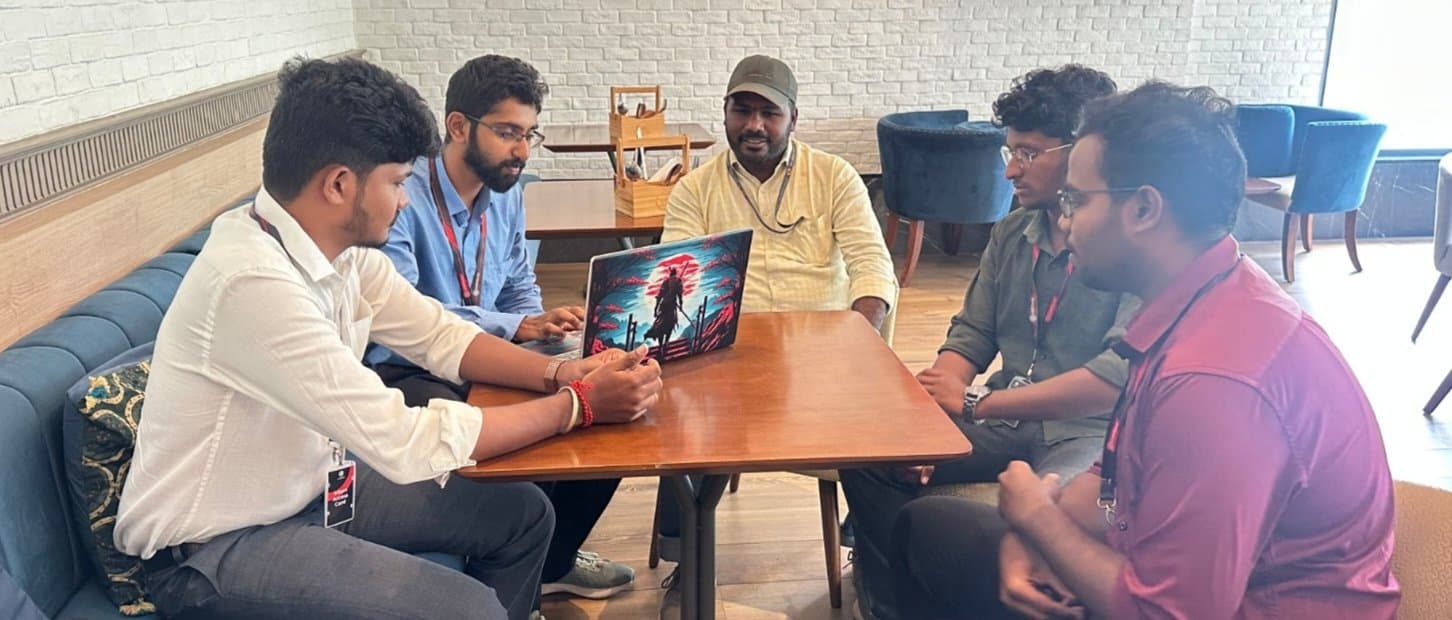
On-site with GAIL: learning pipeline construction at the L&T Bypass
LeakSonic's team visited an active pipeline construction site along the Larsen & Toubro Bypass project, learning directly from GAIL (India) Limited Senior Manager Ashwin Kumar A. about real-world pipeline construction, HDD drilling, and commissioning.
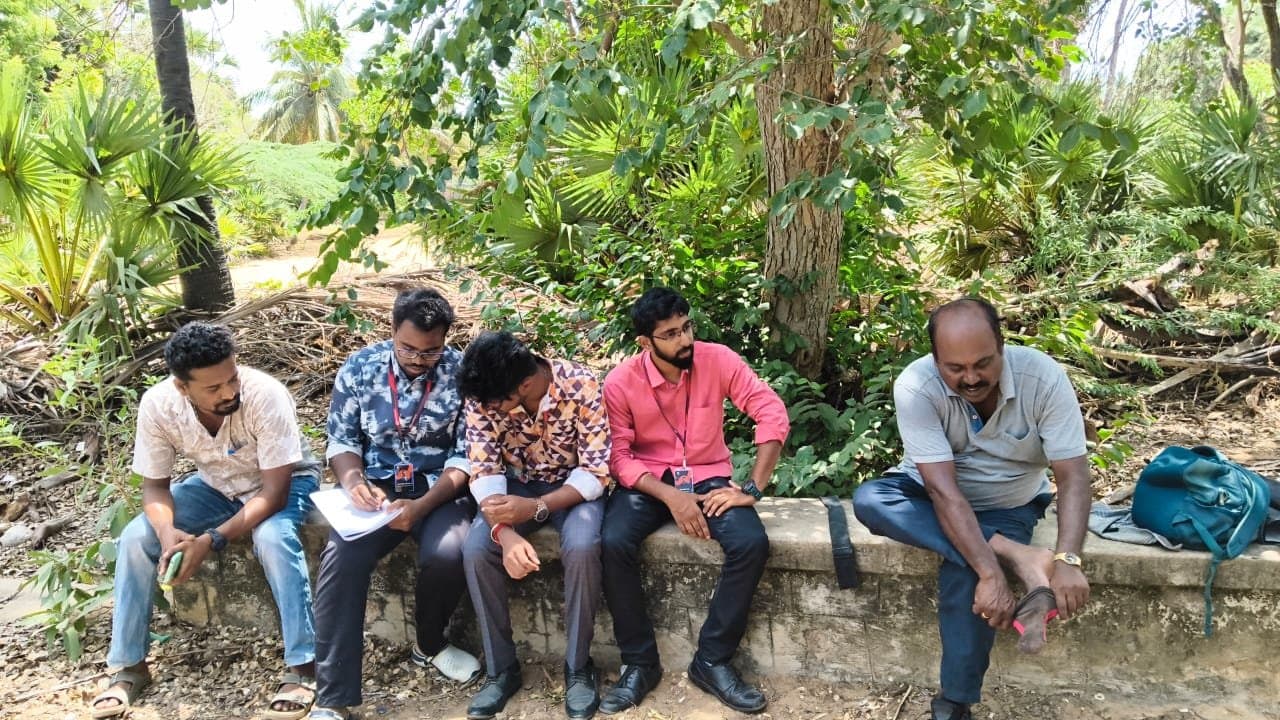
What a Line Security Man actually does on pipeline patrol
Understanding the vital, often-overlooked role of the Line Security Man (LSM) in keeping India's pipeline right-of-way corridors safe, monitored, and connected to local communities - learned firsthand during LeakSonic's field visit with Indian Oil Corporation.