
What is pipeline integrity management, and why does it matter for gas infrastructure?
Pipeline integrity management is the structured, lifecycle discipline of keeping a pipeline safe to operate - identifying threats such as corrosion and third-party damage, assessing risk, inspecting and repairing on that basis, and documenting the whole chain. For gas infrastructure it matters more than for most assets because the product is both a safety hazard and a potent greenhouse gas, and because regulators increasingly require measured, auditable evidence rather than estimates.
Pipeline integrity management is the structured, lifecycle discipline of keeping a pipeline safe to operate. In practice it is a continuous loop: identify the threats a given segment faces, assess the risk each threat poses, plan inspection and maintenance so that the highest-risk segments get attention first, repair what needs repairing, and document every step so the reasoning can be audited later. It is not a single technology or a one-time survey - it is the management system that decides where all the technologies get pointed.
For gas infrastructure this discipline carries unusual weight. The product moving through the pipe is both an immediate safety hazard and, as methane, a greenhouse gas with a global-warming potential many times that of carbon dioxide over a twenty-year horizon. That double exposure means the cost of a lapse is measured in both public safety and climate impact, and it is why regulators increasingly want measured, evidence-backed integrity records rather than estimates.
What does a pipeline integrity program actually contain?
At its core, an integrity program is a threat-and-response framework. Industry practice - codified in standards such as ASME B31.8S for gas transmission and, in India, in the integrity-management expectations set by the Petroleum and Natural Gas Regulatory Board (PNGRB) - organises the work around a defined set of threats. These typically include external corrosion, internal corrosion, third-party mechanical damage, manufacturing and construction defects, ground movement and other geohazards, and equipment or coating failure.
For each threat, the program specifies how it is detected, how severity is judged, and what triggers a response. External corrosion, for example, is defended by protective coatings and cathodic protection, monitored through pipe-to-soil potential surveys, and confirmed where necessary by direct examination or inline inspection. The value of the framework is that it forces an operator to treat the pipeline not as a uniform object but as a sequence of segments, each with its own risk profile.
How does risk assessment drive inspection?
The central move in integrity management is prioritisation. A transmission pipeline can run for hundreds of kilometres, and no operator can examine every metre with equal intensity every cycle. Risk-based inspection ranks segments by the product of the likelihood of a failure and the consequence if it occurs - a segment near a populated area, crossing a river, or with a history of coating defects will outrank a benign rural stretch even at similar probabilities.
This is where a great deal of engineering judgement - and a great deal of time - is spent. The quality of an integrity program is largely the quality of this prioritisation: whether scarce inspection resources are aimed at the segments that genuinely carry the most risk, or spread thinly and uniformly out of caution. The planning phase is often the least instrumented part of the whole cycle, resting on institutional memory and spreadsheets more than on a defensible, data-driven ranking.
Why is documentation a first-class part of the discipline?
An integrity finding that is not recorded in a durable, auditable form is only half useful. Regulators expect operators to demonstrate not just that inspections happened but that the reasoning behind decisions can be reconstructed. In India, PNGRB's role as the statutory regulator for gas pipelines and City Gas Distribution networks includes setting the integrity and reporting standards operators must maintain, and reporting that does not match the expected format creates manual rework.
The documentation burden is compounded by the shift toward measurement-based methane reporting. Frameworks such as the UN Environment Programme's Oil & Gas Methane Partnership 2.0 (OGMP 2.0) push operators from generic emission-factor estimates toward source-level, measured quantification. The direction of travel is unambiguous: from estimated to measured, and from undocumented judgement to auditable evidence.
Where does technology fit - and where does it not?
It is worth being precise about what technology does and does not change here. Inline inspection tools, cathodic-protection surveys, and aerial sensing each measure something real, but none of them is integrity management by itself. They are inputs into the management system. The enduring hard problem is upstream and downstream of the sensor: deciding where to look, and turning what was seen into a prioritised, documented decision.
That framing matters for anyone evaluating new pipeline technology. The question to ask is not "what can this sensor detect?" but "does this make the integrity management loop - threat, risk, inspection, repair, record - tighter, faster, or more defensible?" A tool that produces more imagery without improving the decision has added cost, not integrity.
Questions this raises
Last updated: 30 June 2026
LeakSonic Research. "What is pipeline integrity management, and why does it matter for gas infrastructure?." LeakSonic Private Limited, 2026. https://leaksonic.com/blog/what-is-pipeline-integrity-management
<a href="https://leaksonic.com/blog/what-is-pipeline-integrity-management" target="_blank" rel="noopener">What is pipeline integrity management, and why does it matter for gas infrastructure?</a> - via LeakSonic
Related reading
View all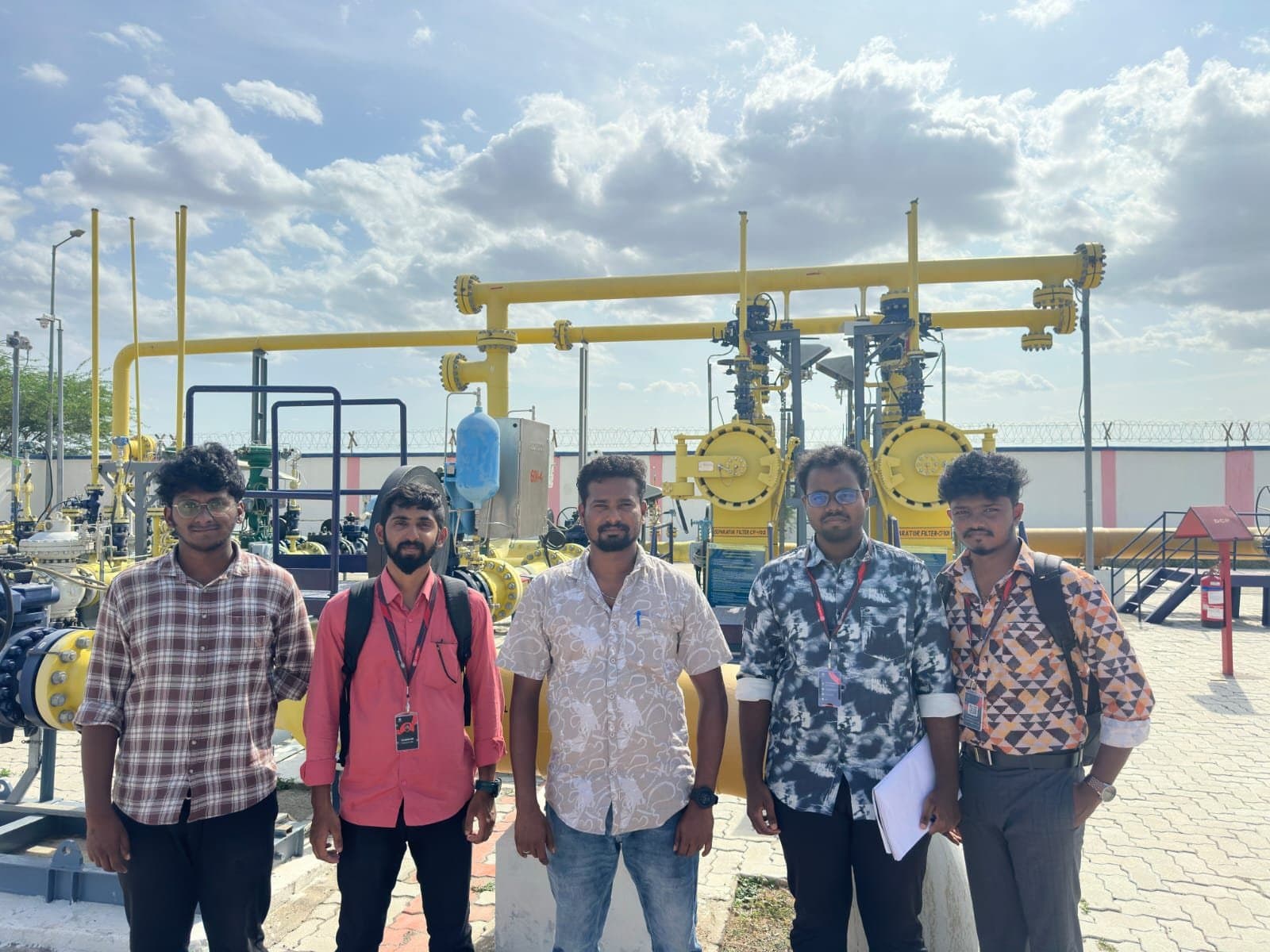
SV and IP stations: the pipeline infrastructure that keeps gas safe
Sectionalizing Valve (SV) stations and Intermediate Pressure Regulation (IP) stations are the unsung infrastructure that keeps gas pipeline networks safe, balanced, and running - seen firsthand during LeakSonic's field visit with Indian Oil Corporation.
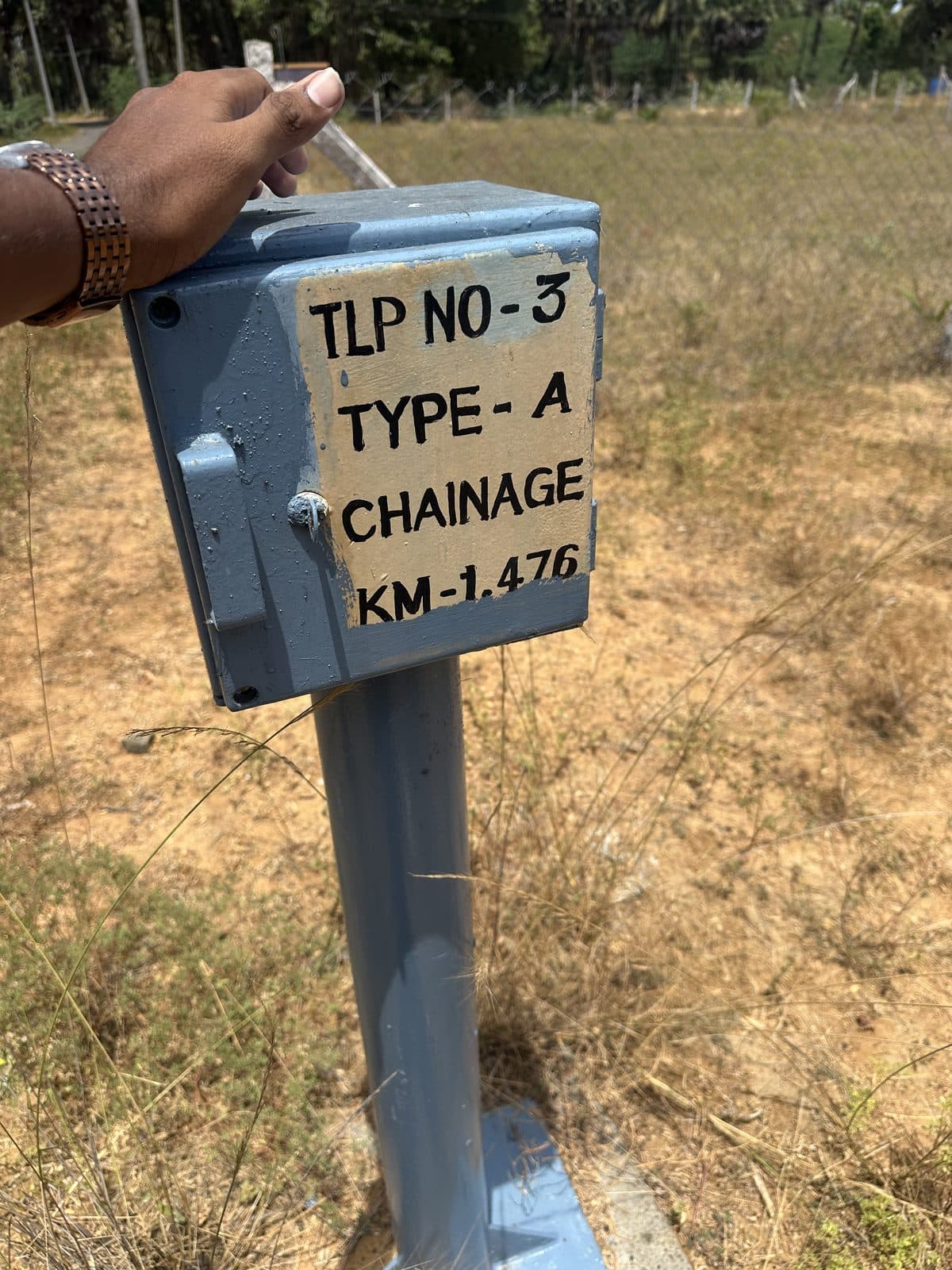
What are cathodic protection test lead points, and why they matter
What are cathodic protection test lead points, and why do they matter? A look at how underground pipelines are protected from corrosion - and monitored - decades after they are buried, seen firsthand during LeakSonic's field visit with Indian Oil Corporation.
Where does your inspection programme sit on the path to measurement-based reporting?
The shift from estimated to measured methane reporting under frameworks like OGMP 2.0 is well underway, but most operators have no quick way to see where their own workflow currently sits on that path. We built a free five-question Integrity & Methane Reporting Readiness Assessment to give a directional answer in under two minutes.