
What are cathodic protection test lead points, and why they matter
What are cathodic protection test lead points, and why do they matter? A look at how underground pipelines are protected from corrosion - and monitored - decades after they are buried, seen firsthand during LeakSonic's field visit with Indian Oil Corporation.
In short
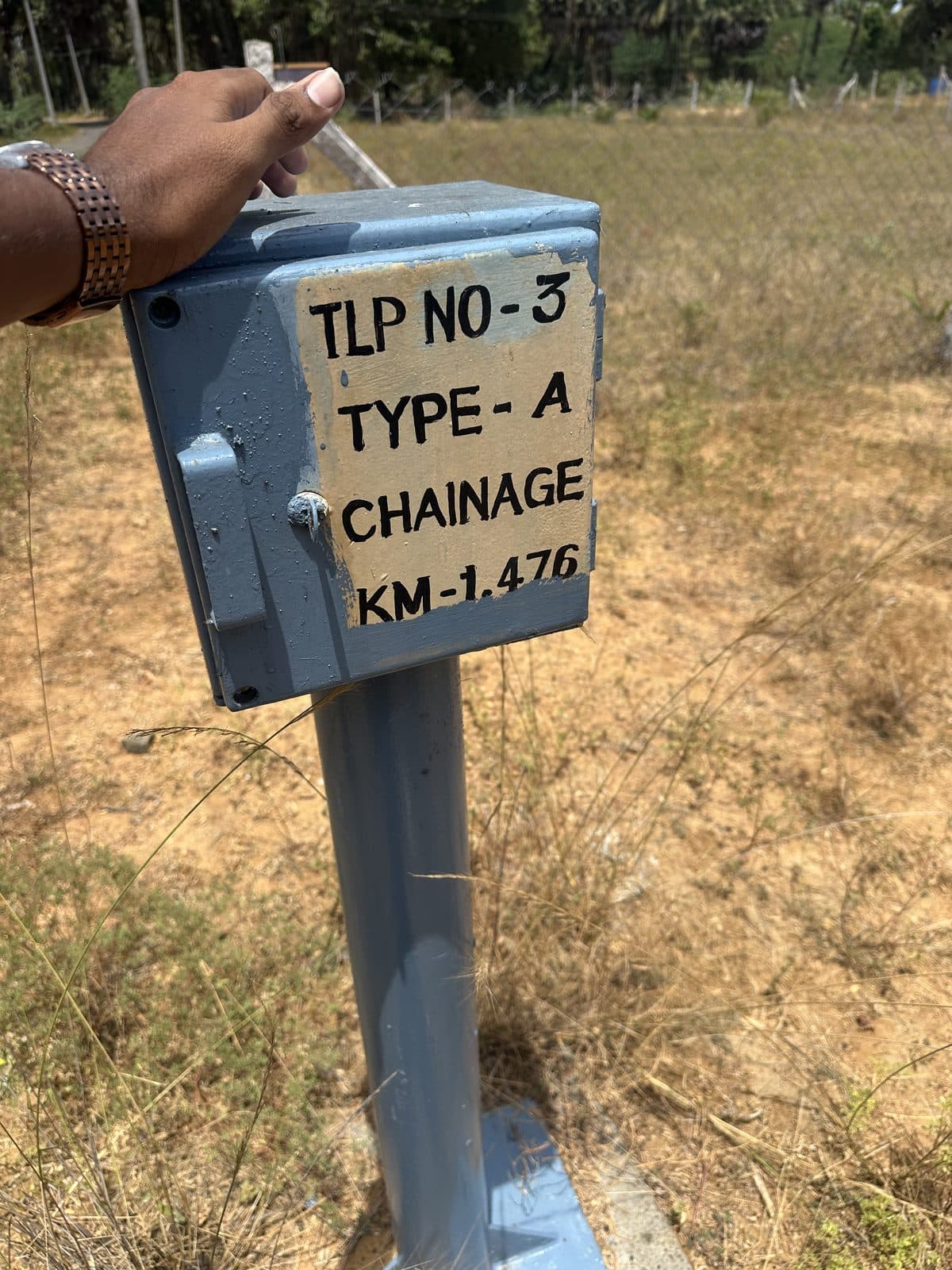
Cathodic protection test lead points (TLPs) are the above-ground access points that let engineers measure whether a buried steel pipeline's corrosion protection system is actually working. LeakSonic's team saw this process firsthand during a field visit with Indian Oil Corporation, including a marked test lead point (TLP No. 3, Type A) along the pipeline right-of-way near Ramanathapuram.
Key takeaways
- Cathodic protection prevents corrosion on buried steel pipelines by maintaining a protective electrical potential, commonly referenced against a -850 mV (vs. copper-copper sulphate) industry criterion.
- Test lead points are the access points used to periodically measure and confirm this protection is working - each one typically marked with an identifying label, chainage, and type.
- Corrosion develops slowly, so tracking trends across multiple readings over time is more valuable than any single measurement - a principle directly shaping LeakSonic's approach to future monitoring technology.
What we learned in the field
Most people never think about how a buried steel pipeline is protected from corrosion - until they learn about cathodic protection, one of the quieter but most essential technologies in pipeline integrity.
Cathodic protection works by making the buried pipeline behave electrochemically like a protected structure rather than a corroding one - typically using an impressed current system that keeps the steel at a protective electrical potential relative to the surrounding soil. Industry practice, guided by standards from bodies like NACE International, commonly references a protection criterion of around -850 millivolts (measured against a copper-copper sulphate reference electrode) as an indicator that a buried steel structure is being adequately protected.
Test lead points are the above-ground access points that make this invisible protection system measurable. Periodically, trained personnel take a reading at each test point to confirm the pipeline segment is still within its protective range. During our recent field learning with Indian Oil Corporation, we had the opportunity to see this process firsthand - including how environmental factors like rainfall, temperature, and even electrical interference from nearby AC power infrastructure can influence these readings, and why experienced technicians look at trends over multiple readings rather than relying on any single measurement.
What we found most interesting is that meaningful corrosion doesn't develop overnight - it's a slow, cumulative process, which means the real value of cathodic protection monitoring lies in tracking change over time, not in any one reading in isolation. That single idea - that trend matters more than any single data point - has genuinely shaped how we think about building better monitoring tools for this industry.
We're grateful to Indian Oil Corporation's engineering team for walking us through this process and helping us understand a part of pipeline integrity that rarely gets the attention it deserves, despite being fundamental to keeping buried infrastructure safe for decades.
Thanks to our LeakSonic team for continuing to make these learning opportunities possible.
Why a single reading isn't the full picture
The most counter-intuitive lesson from this visit was how little a single test lead point reading actually tells you in isolation. A reading taken right after heavy rain, or near a source of electrical interference, can look different from one taken on a dry day with no interference nearby - without either reading being "wrong." What actually matters is the trend across a series of readings over months and years: is the protection level stable, slowly drifting, or showing a pattern that warrants closer investigation.
This is the same principle behind risk-based inspection more broadly - a single data point rarely tells the full integrity story, and the real signal is almost always in how conditions change over time, evaluated against context, not in any isolated measurement treated as a final verdict.
Related reading
This visit was part of a broader multi-day field engagement across IOCL and GAIL infrastructure in Ramanathapuram - see our flagship visit and Sentrix presentation at IOCL's Southern Regional Pipeline division, our visit to an active GAIL pipeline construction site, what we learned about SV and IP stations, and the role of the Line Security Man in pipeline patrolling. For the underlying corrosion-prevention mechanism in more depth, see cathodic protection explained and stray current interference.
Questions this raises
Last updated: 2 August 2026
LeakSonic Research. "What are cathodic protection test lead points, and why they matter." LeakSonic Private Limited, 2026. https://leaksonic.com/blog/cathodic-protection-test-lead-points-pipeline-corrosion
<a href="https://leaksonic.com/blog/cathodic-protection-test-lead-points-pipeline-corrosion" target="_blank" rel="noopener">What are cathodic protection test lead points, and why they matter</a> - via LeakSonic
Related reading
View all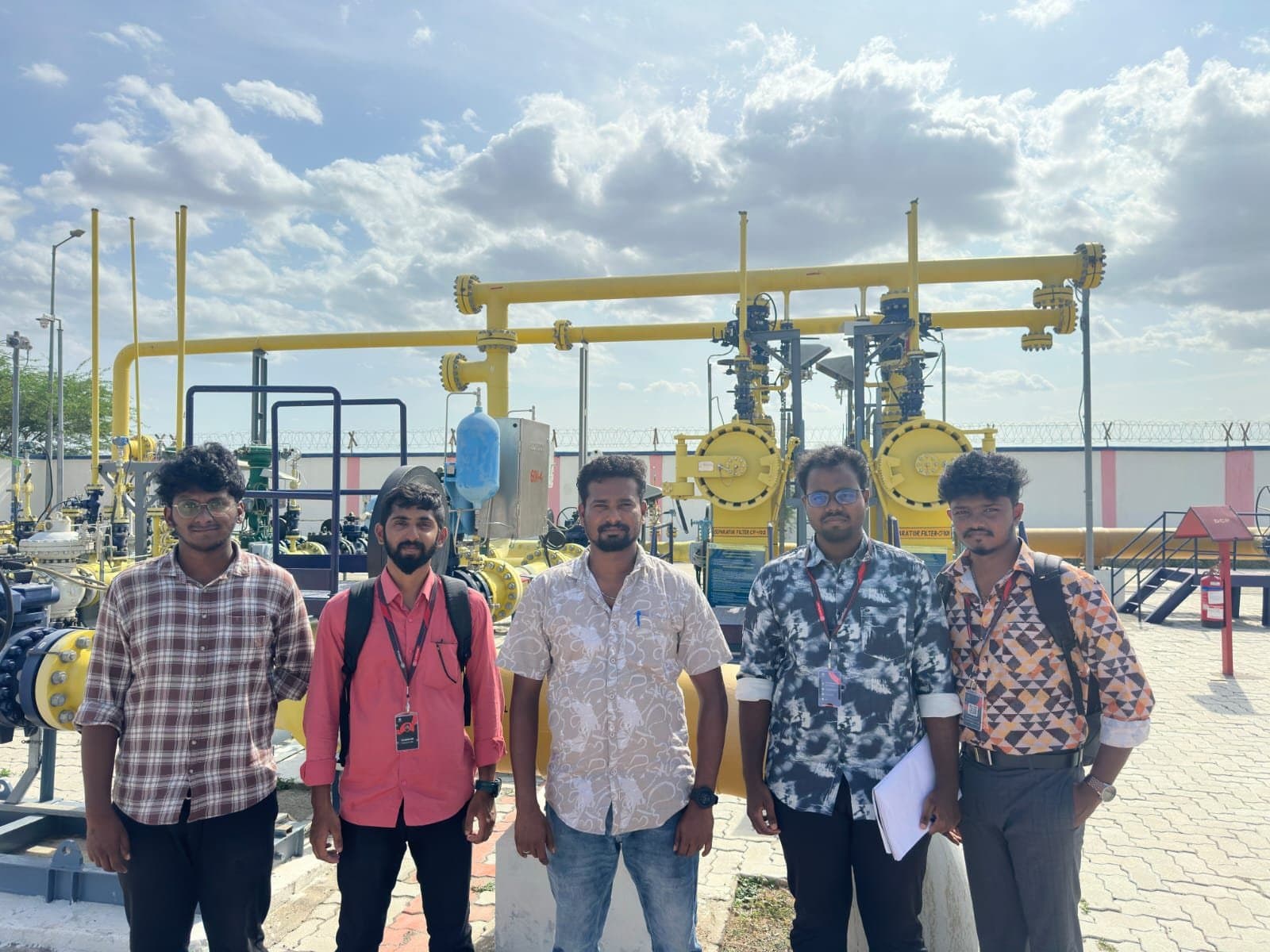
SV and IP stations: the pipeline infrastructure that keeps gas safe
Sectionalizing Valve (SV) stations and Intermediate Pressure Regulation (IP) stations are the unsung infrastructure that keeps gas pipeline networks safe, balanced, and running - seen firsthand during LeakSonic's field visit with Indian Oil Corporation.
Where does your inspection programme sit on the path to measurement-based reporting?
The shift from estimated to measured methane reporting under frameworks like OGMP 2.0 is well underway, but most operators have no quick way to see where their own workflow currently sits on that path. We built a free five-question Integrity & Methane Reporting Readiness Assessment to give a directional answer in under two minutes.
Gas leak detection methods: a complete overview from handheld sniffers to satellites
Gas leak detection spans a spectrum of methods that trade off sensitivity, coverage, and cost: handheld and vehicle-mounted surveys detect small leaks precisely but cover ground slowly; fixed sensors watch one point continuously; aerial methods screen long corridors quickly at moderate sensitivity; and satellites cover everything but only see large emitters. No single method wins on all three axes - which is why serious leak detection programs are built as layered systems, with each layer directing the next.